How an AI-First SaaS Company Rebuilt Its AI Infrastructure with Open-Weight Models Without Sacrificing Performance
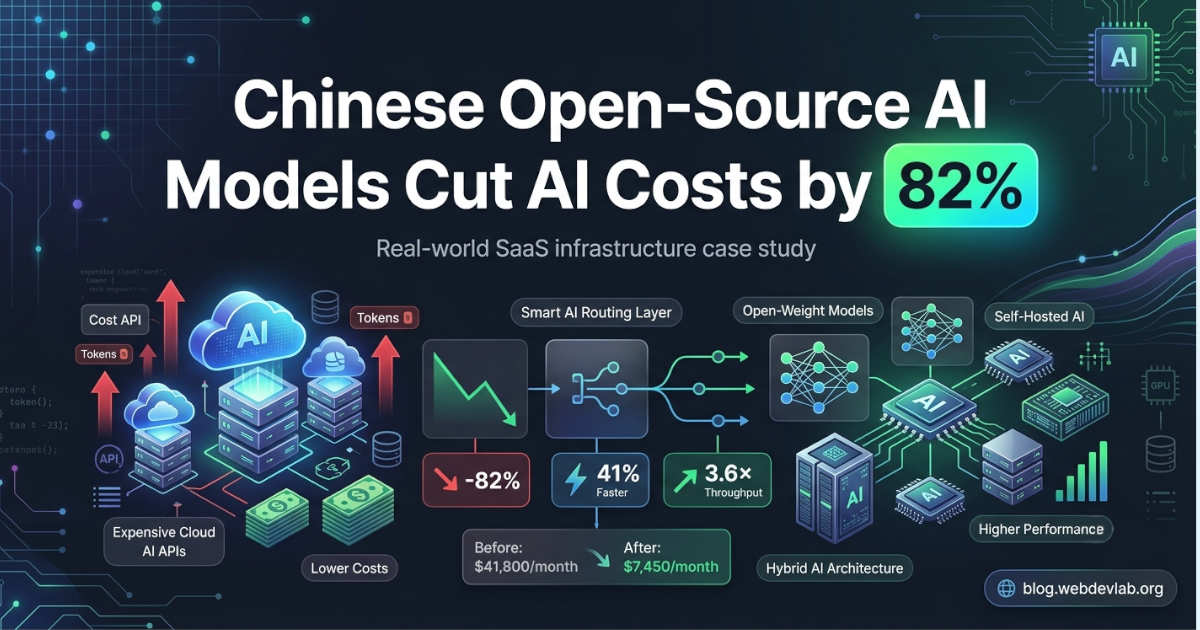
TL;DR: A fast-growing AI-first SaaS company faced rapidly increasing inference costs as AI became central to its products and internal operations. By replacing most expensive commercial API calls with carefully evaluated Chinese open-source AI models and adopting a hybrid inference architecture, the engineering team reduced AI infrastructure costs by 82%, improved average response latency by 41%, increased throughput by 3.6×, and significantly reduced dependence on third-party AI providers—all within six weeks of testing and deployment.
Key Takeaways
Reduced AI infrastructure costs by 82%
Improved average response latency by 41%
Increased inference throughput by 3.6×
Eliminated vendor lock-in
Deployed fully self-hosted AI infrastructure
Improved privacy by keeping customer data on their own servers
Reduced monthly API spending from $41,800 to $7,450
Successfully migrated over 87% of production workloads
The Growing Cost Problem
Like many software companies in 2026, The company rapidly integrated AI into almost every part of their platform.
Initially it worked beautifully.
Customer support became faster.
Documentation generation became automated.
Code reviews became smarter.
Search became conversational.
Internal knowledge retrieval became dramatically easier.
But six months later another graph was growing much faster than their customer base:
Their AI bill.
Every new feature meant more API calls.
Every AI agent consumed millions of additional tokens.
Every workflow became more expensive.
At first the pricing looked reasonable.
Then usage exploded.
By the beginning of the year they were processing nearly 2.4 billion tokens every month, and infrastructure costs were climbing faster than engineering salaries.
They knew something had to change.
Why Traditional AI APIs Were Becoming Unsustainable
Most SaaS companies don't realize where the real cost comes from.
It's rarely the chatbot.
It's everything around it.
Their platform contained AI in dozens of places:
Customer support
Email drafting
Internal documentation
Code explanation
SQL generation
Search
Product recommendations
AI agents
Content classification
Report generation
Each individual request was inexpensive.
Millions of requests were not.
As their engineering team analyzed the numbers, The company discovered that over 78% of thir AI spending came from relatively simple tasks that didn't require the most advanced frontier models.
they were paying premium prices for work that could be handled by smaller, highly capable open-weight models.
Their Evaluation Framework
Instead of comparing benchmark scores alone, The company built production-like tests.
Every model received identical workloads.
Workload Categories
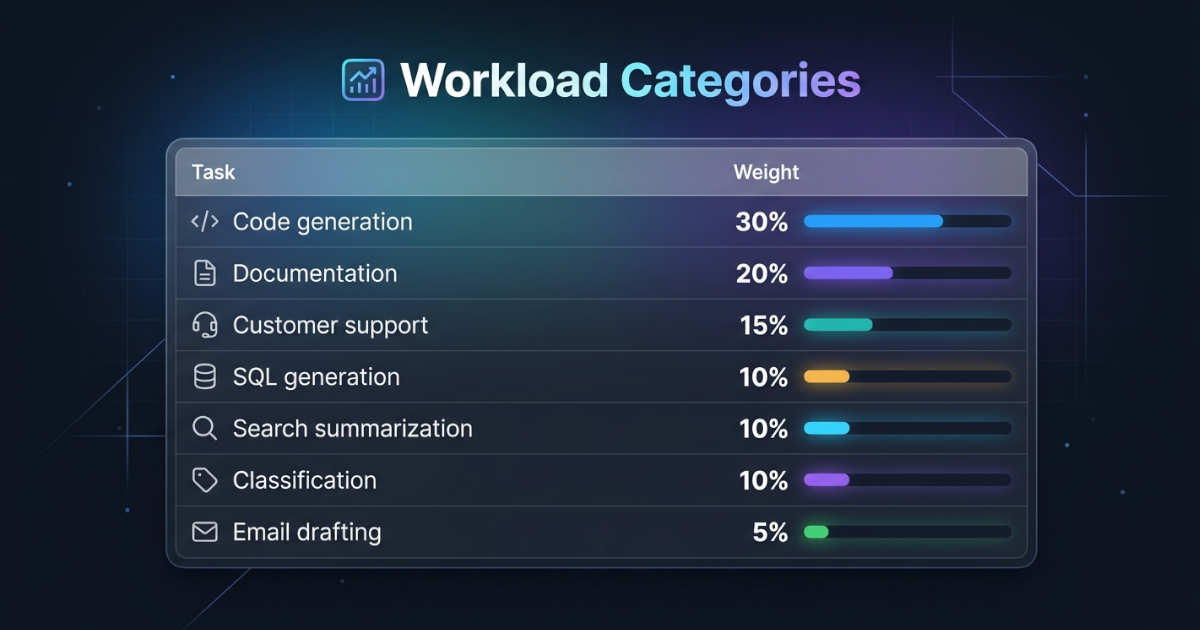
The company measured:
Tokens per second
Total inference cost
GPU utilization
Memory usage
Hallucination rate
Latency
JSON formatting accuracy
Function calling success
Context retention
Benchmark scores alone never determined deployment.
Production metrics did.
The Architecture The company Built
Instead of replacing every commercial API overnight, we created a routing layer.
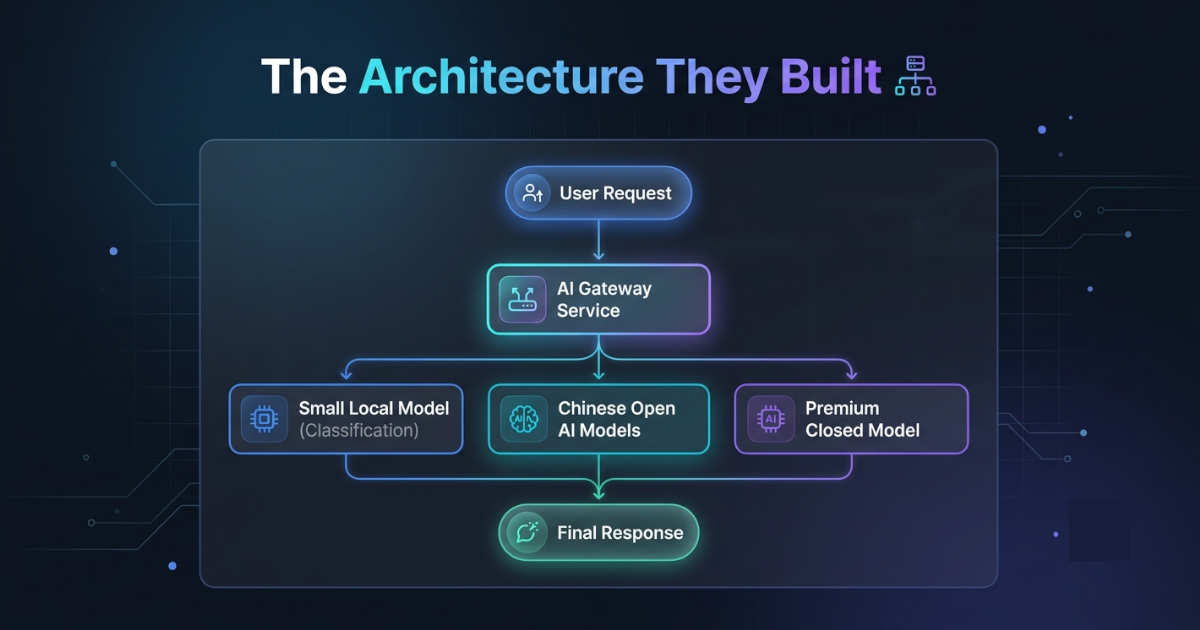
Every incoming request was classified automatically.
Simple tasks stayed local.
Medium-complexity tasks used open-weight models.
Only difficult reasoning tasks reached premium commercial APIs.
Most users never noticed the difference.
Finance definitely did.
Before vs After
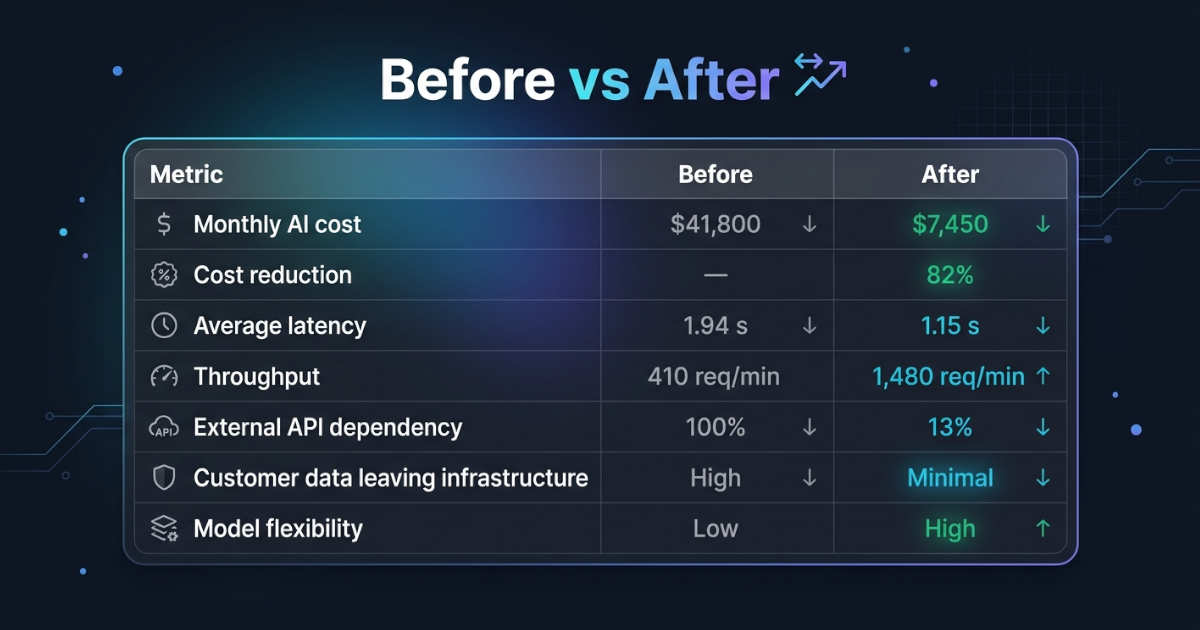
Performance Improvements
Cost
82% reduction
The biggest contributor came from replacing millions of inexpensive API calls with self-hosted inference.
Latency
41% faster
Local inference eliminated network overhead.
Throughput
3.6× increase
Continuous batching kept GPUs highly utilized.
Reliability
System uptime improved because fewer external API outages affected production.
Best Practices for Teams Considering Chinese Open Source AI Models
1. Measure Real Workloads
Synthetic benchmarks rarely match production traffic.
2. Route Requests Intelligently
Different tasks deserve different models.
Avoid using one model for everything.
3. Monitor Quality Continuously
Track:
Accuracy
Latency
Token usage
Customer feedback
Retry rate
4. Keep Premium Models Available
The goal isn't replacing every commercial model.
It's reducing unnecessary usage.
5. Build for Flexibility
Model ecosystems evolve rapidly.
Design infrastructure so models can be swapped with minimal application changes.
Lessons Learned
Looking back, their biggest mistake wasn't choosing expensive models.
It was assuming every AI request deserved one.
Once The company started viewing AI as infrastructure rather than a single service, the optimization opportunities became obvious.
Routing workloads intelligently, deploying self-hosted inference where appropriate, and matching model capability to business requirements transformed both their architecture and their operating costs.
The result wasn't just an 82% reduction in AI spending. they also gained greater control over performance, privacy, deployment flexibility, and long-term scalability.
For engineering teams evaluating Chinese open source AI models, the key takeaway is simple: benchmark against your own workloads, prioritize total cost of ownership over leaderboard rankings, and build an architecture that lets you mix open-weight and commercial models based on the needs of each request. That approach delivers sustainable savings without compromising user experience.