Some days the code fights back. The tickets pile up. A "quick question" on Slack turns into a forty-minute conversation... Somewhere between your third context switch and your fifth cup of coffee the energy just fades away. Most advice, about productivity misses the issue. It tells you to push focus more want it more.. You don’t need more discipline when the day is tough. You need a way to get your energy back. Something small. Something you can do again and again. I’ve worked with developers at all levels for 6 years. The ones who keep going aren’t the smartest. They aren’t the experienced. They’re the ones who know how to bring energy to their work when the work feels lifeless. Here are seven techniques they actually use.
Why Hard Days Hit Developers Differently
Developer work is costly. Not in money... mentally. You carry systems in your mind switch between languages and tools and find solutions to problems that don't have clear answers.
Most of it goes unseen. You can spend a day fixing issues and not have anything to show for it except a bug that no one even noticed. So when your energy goes down it's not a weakness. It's a reaction to tough work. The goal isn't to never have days. The goal is to have a plan, for those days.
1. Start With One Small Win Before You Touch Email
The first hour of your day decides how things go. Begin with Slack and email. You are already responding to what other people care about.
Choose one task you can complete before using any message app.
Small Win | What You Can Do | Why It Helps |
|---|---|---|
Fix something tiny | Fix a README typo, rename a confusing variable, or clean up a small piece of code. | Gives you an immediate sense of progress before the day becomes reactive. |
Write one test | Add a single test for a function or bug you've been avoiding. | Turns an avoided task into a completed action and reduces mental friction. |
Review one PR | Review a pull request you already understand before opening Slack or email. | Creates a clear accomplishment early in the day. |
Complete one small task | Choose something that can realistically be finished in 10–20 minutes. | A finished task can create momentum toward larger work. |
Break down a large task | Instead of “Build the authentication system,” start with “Create the login endpoint.” | Smaller milestones can make complex goals feel more manageable. |
Track the win | Write down what you fixed, shipped, learned, or completed. | Makes otherwise invisible progress easier to see. |
Cross something off | Keep a short morning checklist and mark the first completed item. | The visible progress itself can provide a small motivational boost. |
Set a morning milestone | Decide on one achievable result before checking communication tools. | Gives your morning a clear target instead of letting other people's priorities take over. |
Focus on progress, not perfection | Finish a useful first step rather than waiting for the perfect solution. | Helps maintain momentum when working toward a long-term goal. |
Celebrate the first win | Take a five-minute break, stretch, get some fresh air, or simply acknowledge the accomplishment. | Small rewards can reinforce positive habits and keep you moving. |
Amabile, T. M., & Kramer, S. J. (2011). The Power of Small Wins. Harvard Business Review.
The task doesn't need to matter. It needs to be finishable. Finishing anything... even something tiny, makes the next task easier to start.
One developer I worked with called this "earning your first commit before your first ping." That's stuck with me for years.
You start the day as someone who gets things done. Not someone who reacts to things. That shift carries through the rest of the day.
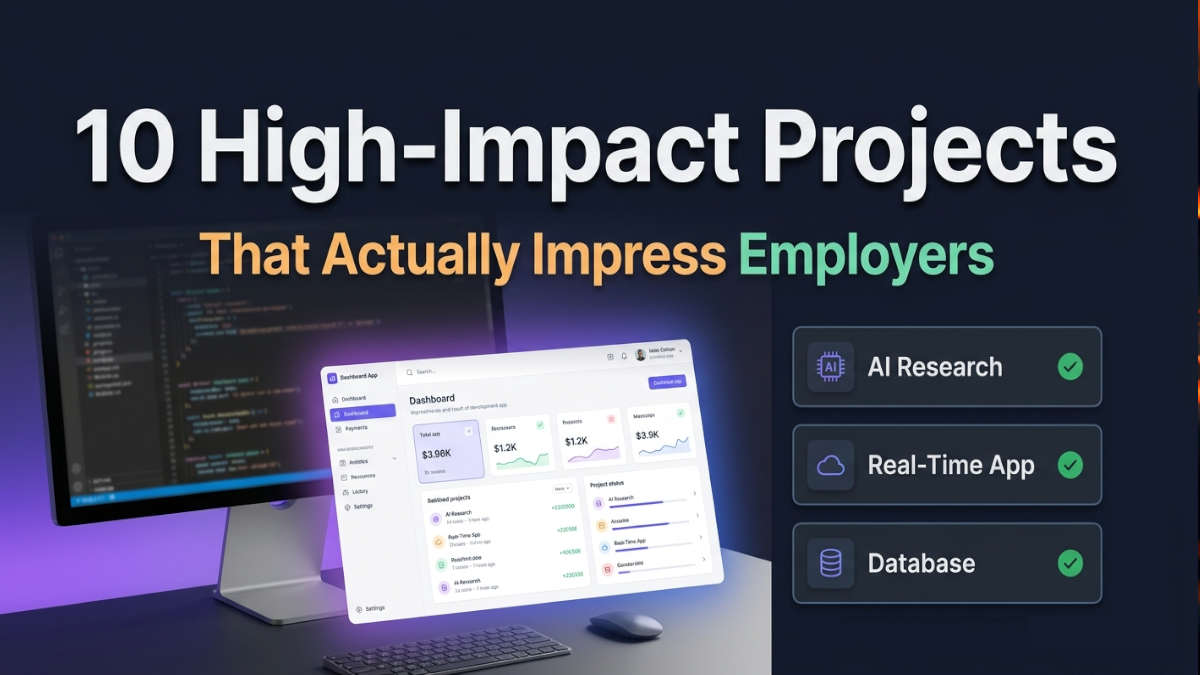
To start small, you can follow those projects idea and start creating them
2. Shrink the Task Until It Feels Almost Embarrassing
When energy is low, big tasks feel impossible. "Refactor the auth module" might as well be "climb Everest."
Shrink the task until it's almost too easy to skip.
Example:
Too big: Build the new user settings page
Still too big: Create the settings form
About right: Add the email input field
Even better: Import the form library and render an empty form
You're not trying to finish the whole thing. You're trying to break the inertia. Once you're moving, momentum usually takes over.
But you can't get momentum from a task that feels like a wall.
If you can't start something in under two minutes, it's too big. Split it again.
3. Change Your Environment, Not Your Willpower
Sometimes the problem isn't you. It's where you're sitting.
Eight hours in the same chair wears you down. Your brain starts linking that spot to fatigue, and the link gets stronger over time.
Small changes that help:
Move to a different room for one task
Take your laptop to a coffee shop for an hour
Stand at your desk for a single coding session
Walk for ten minutes before your next deep work block
You're not procrastinating. You're resetting the context your brain is stuck in.
I've watched developers break week-long blocks just by changing where they sat. Sounds too simple to matter. It matters.
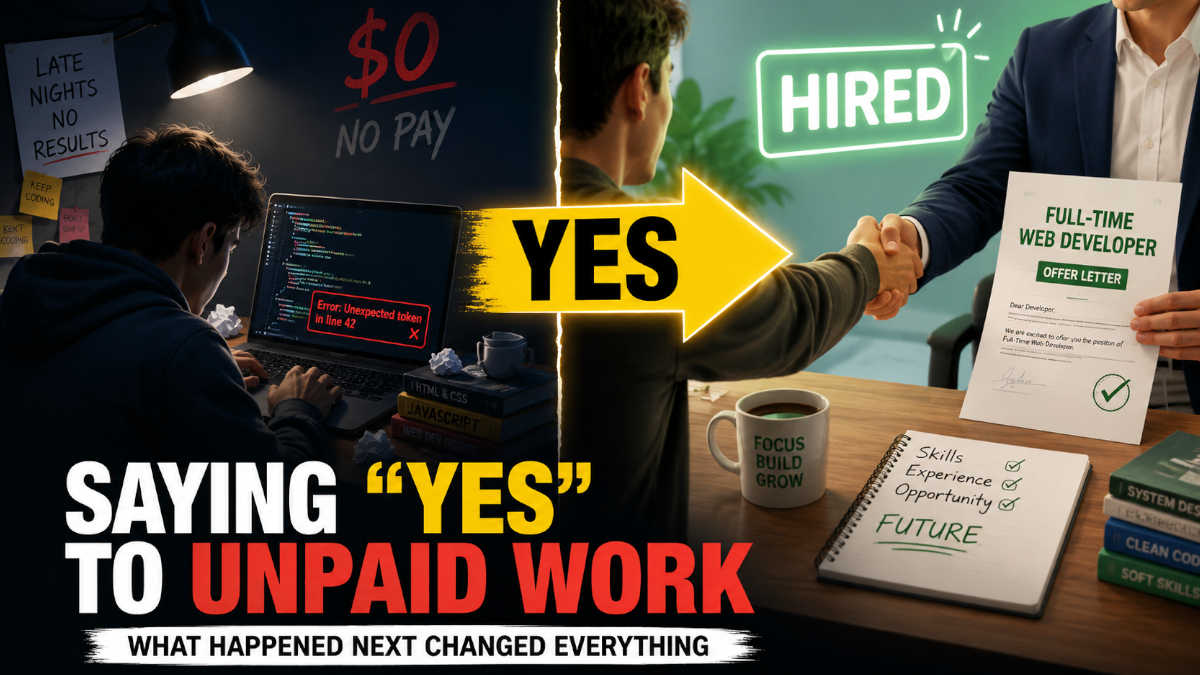
You will power can led you to many opportunities, as like this
4. Use the Two-Minute Reset Between Tasks
Context switching is expensive. Jumping from debugging straight into a code review leaves you drained before you've even started.
So put two minutes between tasks.
A reset looks like:
Stand up and stretch
Refill your water
Look out a window for sixty seconds
Write one sentence about what you just finished
No phone. No email. No Slack.
Two minutes. That's it.
The point is to let your brain close the previous task before opening the next one. Without a reset, you carry the last problem into the new one... and both get harder.
Developers who skip resets often feel busy all day and can't remember what they accomplished. Resets fix that.
5. Work in Visible Chunks, Not Invisible Hours
One of the hardest parts of this job: progress is often invisible. Six hours on a problem, nothing to show for it.
Make your work visible... to yourself.
Effect sizes from a 2016 meta-analysis of 138 studies involving 19,951 participants.
Why visible progress matters
Find A meta-analysis of the experimental evidence
Try this:
Keep a running log of what you shipped, fixed, or learned each day
Use a checklist and cross items off as you go
Write commit messages that explain the why, not just the what
End the day by noting one thing that's better than it was this morning
This isn't productivity theater. It's giving your brain evidence that your effort is producing something.
On hard days, your memory lies. It tells you that you did nothing. A visible log tells the truth.
6. Protect One Thing You Actually Enjoy
When energy is low, the instinct is to grind harder. Cut the fun stuff. Focus only on what's urgent.
That's backwards.
The developers who recover fastest protect at least one part of their work they genuinely enjoy even on the worst days.a
Examples:
A small open-source contribution
A script that makes your own life easier
A mentoring conversation with a junior dev
Reading about a topic you're curious about, even if it's not on the roadmap
This isn't a reward for finishing your real work. It's fuel for doing it.
Joy at work isn't something a job title gives you. It's something you bring. Protecting one enjoyable thing is how you bring it when everything else feels heavy.
7. Decide to Bring Energy Before You Feel It
This is the hardest one. And the most important.
Most people wait to feel motivated before they act. That's backwards. Action creates motivation, not the other way around.
On hard days, you have to decide to bring energy before you feel it. Not fake hype. Not forced positivity. Just a quiet decision to show up fully, even when the day doesn't deserve it.
How to practice this:
Before your first task, say it out loud or in your head: "I'm bringing my full attention to this."
When a meeting starts, decide to be present instead of checking out
When a bug frustrates you, decide to be curious instead of angry
Sounds soft. It isn't.
The joyful man I keep thinking about the one running like it was the greatest day of his life nobody gave him permission to feel that way. He just decided.
You can decide too. Not once. Every day.
How to Use These Without Overwhelming Yourself
Seven techniques is a lot to remember on a bad day. Don't use all of them.
Start with one:
Pick the technique that feels easiest
Use it for a week
Notice what changes
Add another only when the first feels automatic
The point isn't to become a productivity machine. It's to build a small set of habits that keep you steady when the work gets heavy.
Energy isn't something you have or don't have. It's something you build, protect, and bring. On purpose.
Conclusion
Hard days are part of the job. Hard days are not a sign you are doing something. Hard days are a sign you are doing something demanding. None of the techniques will fix a broken team, a toxic manager or a project that was doomed from the start.. They will help you bring energy to the parts of your work that you can control. Start with one win tomorrow morning. Shrink your task until it is almost too easy to skip. Reset between tasks. Protect one thing you enjoy.. Decide before you feel it that you are bringing your full attention to the day. Joy at work is not something a title gives you. Joy, at work is something you bring to it. That is not motivation. That is a choice.
What is one thing you do to bring energy to your work on the days that feel hardest?