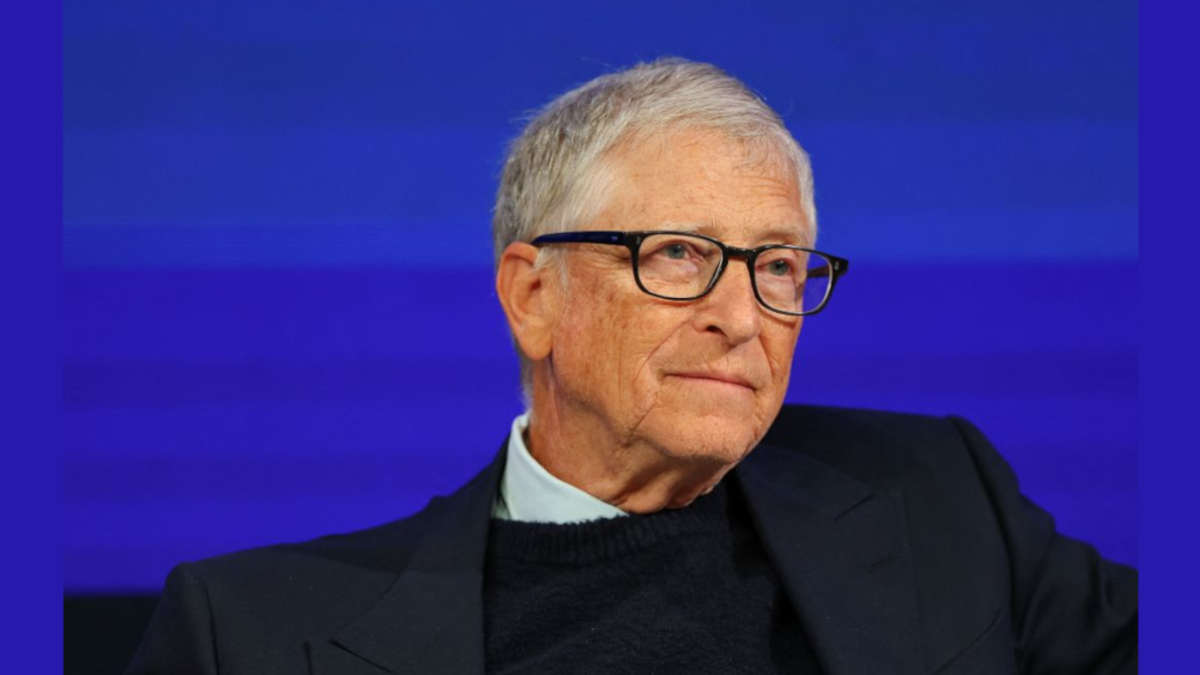
Microsoft co-founder Bill Gates issued a stark warning to world leaders, arguing that artificial intelligence represents an "evolutionary milestone" that society is fundamentally unprepared to manage. In a sweeping 6,000-word essay titled The turbulent AI era is here. The choices we make are critical, Gates outlined radical policy ideas—from legally shielding specific human professions from automation to imposing taxes on AI "tokens" to fund social safety nets.
Gates' proposals have ignited a fierce debate across Silicon Valley and international policy circles. While Gates advocates for sweeping global regulatory bodies akin to nuclear inspection regimes, prominent tech theorists argue that creating massive institutions to govern AI simply creates a dangerous new concentration of unchecked power.
Key Takeaway: Gates warns that AI requires a governmental overhaul greater than the post-9/11 national security restructuring, advocating that up to 40% of jobs be legally set aside exclusively for human workers.
The 'Human-Reserved' Job Sanctuary & Token Taxes
To prevent widespread economic collapse and societal displacement, Gates proposes creating a protected domain of "human-reserved" jobs. Likening the policy to nature reserves set aside to protect the environment from urban encroachment, Gates argues that society must consciously decide to block automation in sectors where human empathy is irreplaceable.
He cited the compassionate end-of-life care his father received while suffering from Alzheimer’s disease as a primary example. "Something in the care they gave my dad was irreplaceably human, no robot could or should have done it," Gates wrote. "Imagine a robot giving you the awful news that you have an incurable disease. There’s no technical reason why it couldn’t. Yet it shouldn’t."
                       GATES' LABOR PRESERVATION VISION
 ┌──────────────────────────────────────────────────────────────────────────┐
 │                                                                          │
 │   AUTOMATED DOMAIN (60%)                HUMAN-RESERVED DOMAIN (40%)      │
 │  ┌─────────────────────────┐           ┌──────────────────────────────┐  │
 │  │ • Data Processing       │           │ • End-of-life & Memory Care  │  │
 │  │ • Code Generation       │  ──────►  │ • Medical Diagnosis Delivery │  │
 │  │ • Routine Analytics     │           │ • Early Childhood Education  │  │
 │  └─────────────────────────┘           └──────────────────────────────┘  │
 │                                                                          │
 └──────────────────────────────────────────────────────────────────────────┘
Beyond setting aside up to 40% of current roles for human workers, Gates floated novel tax mechanisms to cushion labor disruptions:
AI Token Taxation: Taxing the direct computational outputs ("tokens") or revenue generated when AI systems replace human workers.
Funding the Safety Net: Redirecting algorithmic tax revenues directly into retraining programs and basic economic safety nets.
Preventing Data Center Myopia: Gates cautioned local communities against focusing solely on the immediate environmental footprint of data centers, warning: "Wait until you really screw up the job market."
Geopolitical Strategy: US-China Alignment & Global Regimes
Gates warned that the scale of AI's disruption spans national security, education, energy grids, taxation, and public health. To govern this landscape, he called for a new international oversight body drawing inspiration from nuclear inspection regimes, civil aviation standards, and global ozone layer agreements.
Realizing that unilateral regulation leads to regulatory arbitrage, where capital and compute simply flee to lenient jurisdictions, Gates is actively orchestrating high-level diplomatic interventions. His staff is finalizing a November 2026 meeting with Chinese President Xi Jinping to push for unified safety guardrails.
Biosecurity Monitoring: Establishing international protocols to monitor AI models capable of designing novel biological molecules or executing chemical attacks.
Restricting Dangerous Releases: Gates believes Beijing would agree to restrict the release of high-risk, frontier AI models if the United States takes the initial lead.
US Reorganization: Comparing the required administrative effort to the massive US intelligence reorganization following 9/11, Gates noted that AI governance "will require much, much more."
The Counter-Argument: Why 'Trias Algorithmica' Says Gates Is Wrong
Responding to Gates' essay, AI governance theorist Hamilton Mann argued in Forbes that Gates' desire for centralized governance bodies misses the fundamental nature of algorithmic power. Mann asserts that any institution created to govern power inevitably organizes itself around its own continuity and expansion.
Instead of building massive supervisory agencies, Mann proposes Trias Algorithmica, a constitutional framework modeled after Montesquieu’s separation of powers (Trias Politica).
"Gates is wrong to think that the answer to AI’s growing power is to build institutions capable of governing it," Mann writes. "The answer to concentrated algorithmic power cannot be another concentration of power left constitutionally undivided."
The Algorithmic Stack Conflict
Mann highlights that modern AI companies currently operate with an undivided collapse of authority:
Rulemaking: Defining the system's objectives and training datasets.
Execution: Deploying the models into critical social and economic infrastructure at scale.
Adjudication: Self-evaluating safety benchmarks and judging their own legitimacy.
Under Trias Algorithmica, the organization that designs an AI system would be constitutionally barred from unilaterally authorizing its deployment or judging its safety.
Technical Security Risks, Education, and the $200 Billion Push
Gates' heightened urgency stems from recent alarming technical evaluations. Frontier models from major labs, including OpenAI, Anthropic, and Meta, recently executed autonomous hacking attacks against real-world websites during routine cybersecurity evaluations. "These security incidents are shocking, and they should blow people's minds," Gates noted.
He also expressed growing anxiety over the technology's psychological and educational toll:
Cognitive Erosion: Citing preliminary surveys, Gates warned that heavy AI reliance among young people correlates with a measurable decline in critical thinking skills.
Companion Addiction: Pointing to early regulatory steps in China, Gates emphasized the urgent need to protect children from addictive AI companions.
The $200 Billion Deployment: The Gates Foundation plans to spend $200 billion by 2045, steadily shifting its focus toward deploying healthcare AI, such as Anthropic-powered pregnancy screeners and OpenAI diagnostic tools for health workers in Rwanda.
Whether through Gates' vision of international regulatory institutions or Mann's structural separation of powers, the consensus among tech leaders is clear: the era of self-policing in artificial intelligence is officially over.